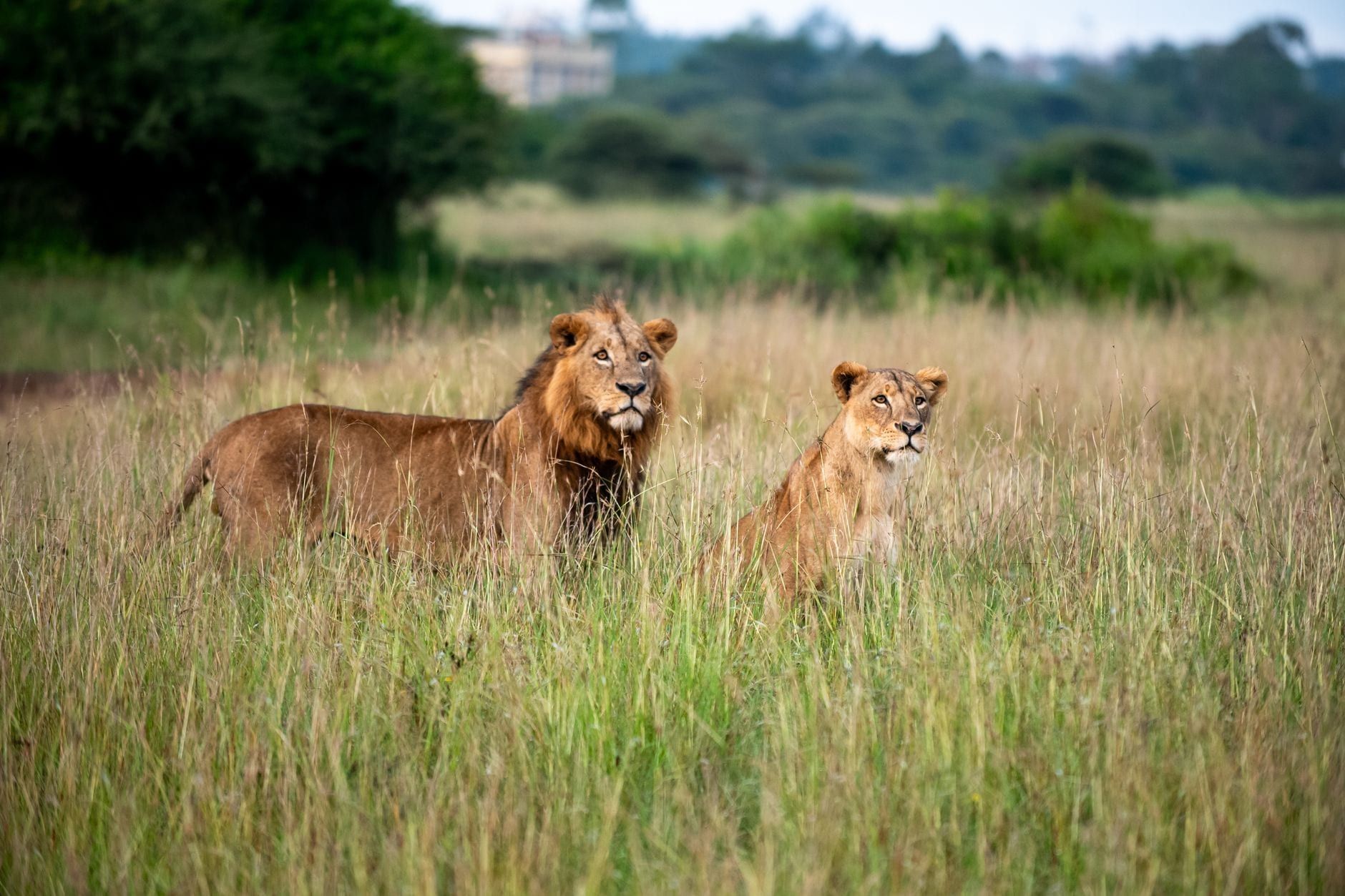
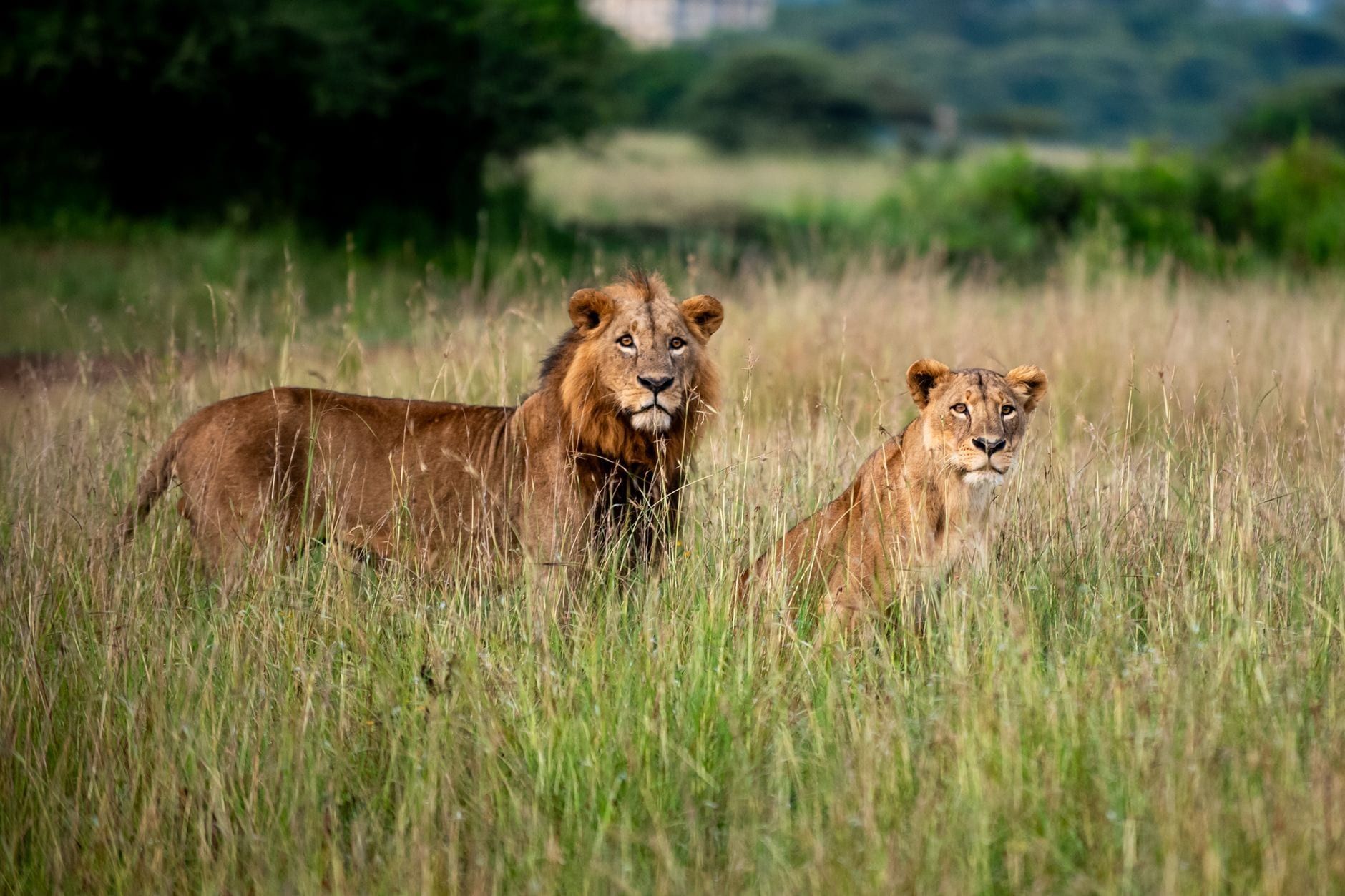
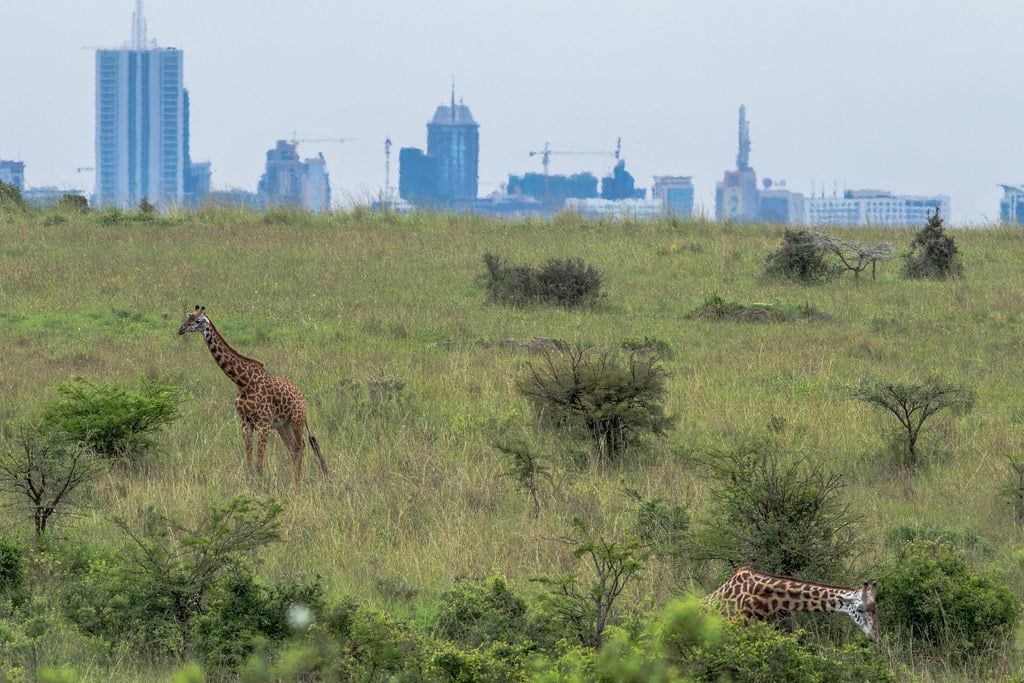
Nairobi National Park puts lions, black rhino, and giraffe against a skyline of glass towers, seven kilometers from Nairobi's CBD. It's the only national park in the world set inside a capital city, and the animals inside it behave as if the city doesn't exist. You can spend a morning watching a lion pride doze in open grass with a jetliner descending into the airport behind them.
This guide covers what actually lives here, why one famous animal is missing, and how to time a visit so you see the most of it. For the logistics behind any of this, our park visitor guide has the full rundown.
Nairobi National Park at a Glance
Kenya gazetted this park in 1946, seventeen years before independence, making it the country's first. Conservationist Mervyn Cowie pushed for its protection after returning to Kenya in the 1930s and finding the game herds of the Athi plains thinning out year by year. The land he fought to protect had been shared by Maasai herders and colonial settlers for generations — the same plains where Karen Blixen once rode among zebra and gazelle before any boundary existed.
The park covers 117 km², a small fraction of the wider ecosystem it sits in. Fences seal off the northern, eastern, and western edges where the city presses in, but the southern boundary is open, following the Mbagathi River into the Kitengela Conservation Area and the Athi-Kapiti plains beyond. That open edge is what makes this a real ecosystem rather than a fenced zoo, and it's the reason animals move in and out with the seasons. KWS calls it the world's only wildlife capital — a fair claim, since nowhere else can you photograph a giraffe with a skyscraper in the frame.
The Wildlife You Can See: Mammals and the 'Big Four'
Locals call this a Big Four park, not a Big Five one, and the mammal list backs that up fast once you're through the gate.
Predators: Lions, Leopards and a Surprise Serval or Two
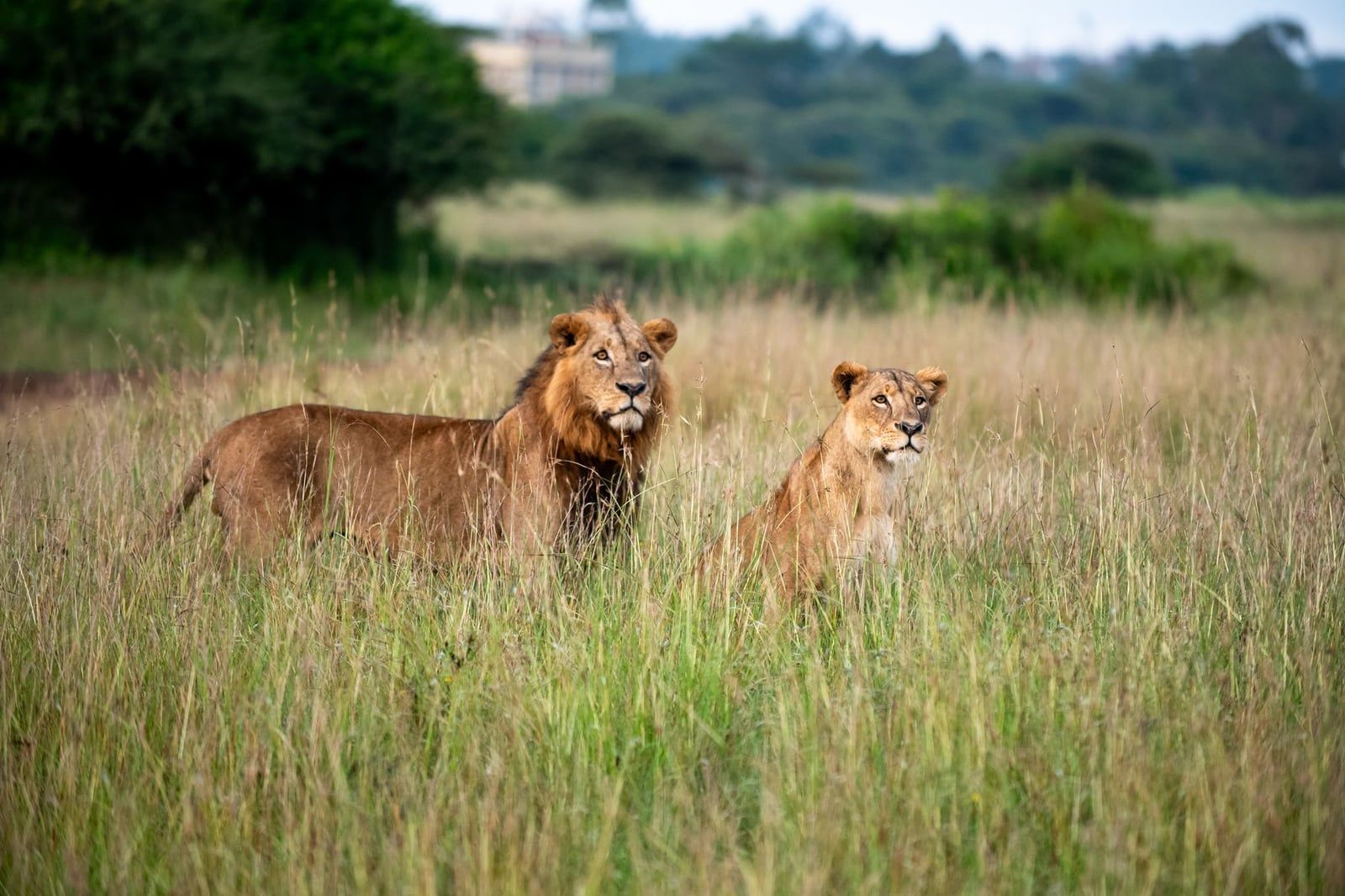
More than 40 lions live here in three known prides — Kingfisher, Athi, and Mokoyet — enough for the IUCN Cat Specialist Group to designate the park an official Lion Conservation Unit. Leopards are around too, but they favor the rocky valleys and riverine forest along the Mbagathi, so sightings take patience and a sharp-eyed guide. Keep watching the long grass at dawn: this is one of the better places in Kenya to spot a serval, a slighter, spotted cat that hunts rodents by sound and freezes the instant a vehicle slows down.
Rhino and Buffalo: the Park's Big Four
Buffalo move in loose, dusty herds across the open plains and are among the easiest big animals to find on any drive. Both black and white rhino live in the park too, which is the real headline — pairing them with lion, leopard, and buffalo gets you four of the Big Five inside a single morning's drive. The rhino story here is big enough to deserve its own section, below.
Why There Are No Elephants
Elephants need far more room than 117 km² of fenced-on-three-sides savanna can give them; herds range over hundreds of square kilometers in search of food and water, and this park simply can't support that. So there's no resident elephant population, full stop. You can still watch orphaned elephant calves up close nearby at the David Sheldrick Wildlife Trust, inside the park boundary, on an elephant orphanage tour that pairs the visit with a game drive.
Giraffe, Zebra, Hippo and the Rest of the Plains Game
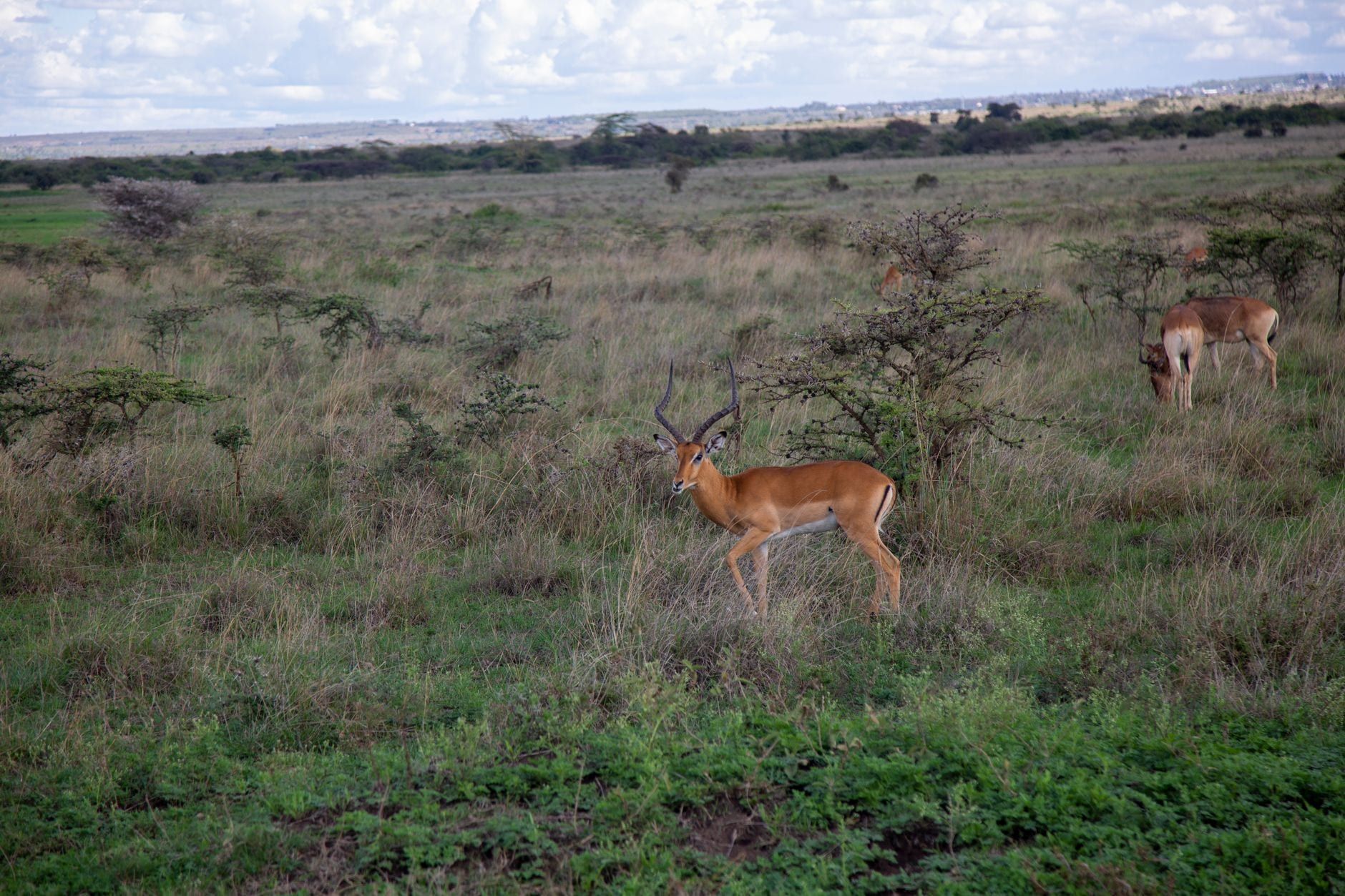
Giraffe stand out against the horizon almost everywhere in the park, and zebra herds graze alongside eland, hartebeest, waterbuck, impala, and Grant's and Thomson's gazelle. Hippo wallow in the dams and the Mbagathi River, sharing the water with the odd crocodile. Warthog trot across the tracks in family lines, hyena patrol at dusk, and ostrich stalk through the grass in pairs — plenty of movement even on a slow game drive.
Black Rhino Sanctuary: A Conservation Success Story
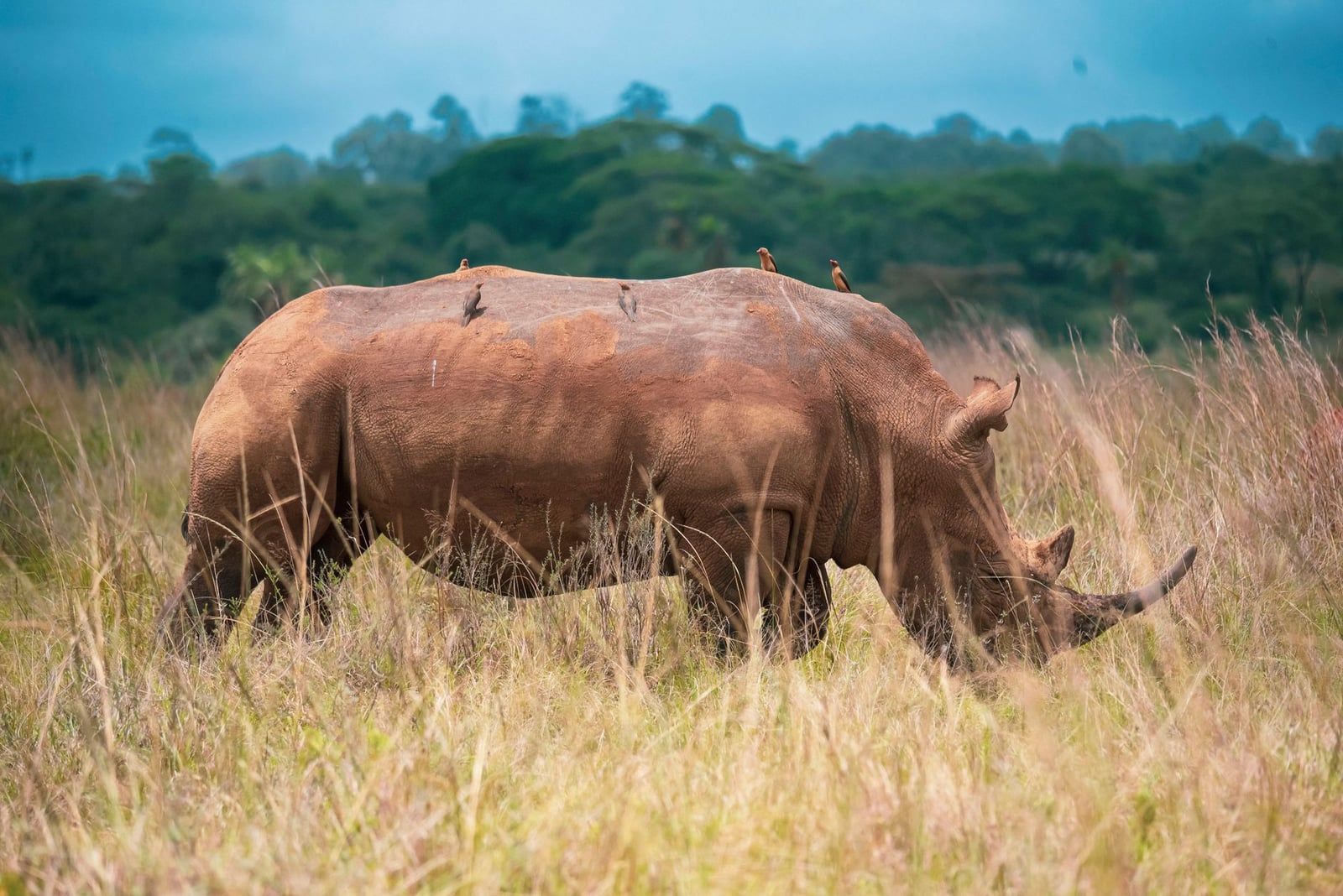
Nairobi National Park holds over 100 black rhino, nicknamed the Kifaru Ark after the Swahili word for rhino — one of the highest black rhino densities anywhere in the country. That's a striking number for a park this size, and it's no accident: the fenced northern, eastern, and western edges that hurt elephant prospects work in the rhino's favor, keeping a relatively secure, well-monitored population close to Nairobi's ranger network and veterinary support.
The sanctuary also feeds Kenya's broader rhino recovery. As numbers here grow past what the habitat can comfortably hold, KWS translocates individuals to other reserves to seed or bolster their own populations. Few parks anywhere let you get this close to a black rhino, on this short a drive, with this good a chance of success. If rhino are the animal on your list, this is the park to book.
Birdwatching: Over 400 Species in an Urban Park
Over 400 bird species have been recorded inside the park, some counts running past 500 — a tally that rivals far larger Kenyan reserves. Resident species share the plains and dams year-round with Palearctic migrants that arrive between November and April, fleeing the northern winter.
Secretary birds stride through the grass hunting snakes, grey-crowned cranes stalk the wetter margins, and weavers crowd the reeds around the dams in noisy colonies. Raptors work the thermals above the open plains most afternoons. The dams and the riverine forest edges along the Mbagathi are the best single stretches for a concentrated birding session, and a slow hour there often turns up more species than a fast lap of the whole park.
Seasonal Wildlife Movements: The Kitengela Migration Corridor
The park's unfenced southern border isn't an oversight — it's the point. Following the Mbagathi River, it connects the park to the Kitengela Conservation Area and the wider Athi-Kapiti ecosystem, of which the park itself makes up less than a tenth. Wildebeest, zebra, and eland move across that open edge with the seasons, in a small-scale echo of the migration you'd associate with the Maasai Mara.
In the dry months, animals push back into the park to reach permanent water at the dams and the river, which is exactly why dry-season game drives feel busier. During the rains, from roughly March to May, herds disperse widely across the Kitengela plains and sightings inside the park thin out. That dispersal keeps the ecosystem healthy, but it's also increasingly fragile — a problem the closing section digs into.
Best Time and Ways to See the Wildlife
Species knowledge only helps once you know when to go and how to get around once you're inside, so here's the practical version.
When to Go: Dry Season, Calving Season, or Anytime
July through October is the strongest window: the long dry season pulls animals toward the dams and river, roads stay firm, and predator sightings improve as prey concentrates in fewer places. January and February bring the calving season, when new wildebeest and gazelle calves draw in more lion and hyena activity. Skip the muddiest stretch of the long rains, roughly March to May, if game density matters more to you than lush green scenery — herds scatter onto the Kitengela plains and tracks can turn to soup. That said, the park's location means it's a viable option any month, unlike safari circuits that require a flight.
Game Drives: Guided, Private or Self-Drive
Most visitors book a driver-guide with an open-roof 4x4 or minivan, with hotel pickup included — the standard way to actually see the park, since walking isn't permitted in the main game-viewing areas. A typical half-day game drive starts around 6:00–6:30 am, right at gate-opening, and wraps by late morning; that early slot also happens to deliver the best light and the most active predators before they retreat to shade. Renting a 4x4 and self-driving is possible too, but you still have to obey the 40 km/h speed limit, stay inside the vehicle except at marked points, and keep 20 meters from any animal. Travelers with mobility needs or young kids are usually better off with a private vehicle, which lets the guide set a gentler pace and skip walking sections.
Safari Walk, Animal Orphanage and the Ivory Burning Site
The Nairobi Safari Walk, a raised boardwalk right by the Main Gate, is the easiest wildlife fix in the park: no vehicle needed, and it delivers close views of white rhino, bongo antelope, and albino zebra through recreated wetland, savannah, and forest habitats. It's worth 45 minutes before or after a drive, especially for anyone with limited time or mobility.
The David Sheldrick Wildlife Trust, inside the park boundary, opens to the public for exactly one hour a day, 11:00 am to noon, when keepers bottle-feed orphaned elephant calves and let them play in mud right in front of visitors. Time your drive around that window if you want to see it — arrive late and you'll find the gate shut until the next day. The Ivory Burning Site Monument, where Kenya publicly destroyed its confiscated ivory stockpile as an anti-poaching statement, now works as a quiet picnic stop worth folding into a longer loop.
Planning Your Visit: Fees, Hours, Getting There and Rules
The park opens daily at 6:00 am and closes at 6:00 pm, with last entry around 5:15 pm; you can't drive inside outside those hours unless you're overnighting at a lodge within the boundary. Fees are paid cashlessly through the KWS eCitizen portal or at the gate — check current rates on the official hours and fees page before you go.
| Category | Adult fee | Child fee |
|---|---|---|
| Non-resident | USD 80 | Reduced child rate |
| Kenya resident | KES 1,350 | KES 675 |
| East Africa citizen | KES 1,000 | KES 500 |
Vehicle entry adds KES 300 to KES 5,000 depending on seating capacity. The Main Gate sits on Langata Road, 8–10 km from the CBD; an Uber or Bolt takes 20–40 minutes and runs roughly USD 12–20, while a matatu from Railways Bus Station or Nyamakima costs about KES 600 but takes an hour or more with transfers. The park's runway-adjacent location — under 5 km from Jomo Kenyatta International Airport — makes it a popular stop on a layover; see our directions and transport guide for the full breakdown, or our day trip planning guide if you're stitching a full itinerary together.
- Stay inside the vehicle with doors closed except at designated picnic or observation points.
- Keep at least 20 meters from any animal and don't exceed 40 km/h.
- No feeding wildlife, no single-use plastics, no drones without written KWS and aviation authority permits.
- Book entry online through KWS eCitizen where possible — cash options at the gate are limited.
Conservation Challenges Facing the Park's Wildlife
The same open southern border that makes the migration possible is under steady pressure. Roads, rail lines, and fencing spreading out from Nairobi have progressively narrowed the corridor linking the park to the Kitengela and Athi-Kapiti dispersal areas, squeezing the space wildebeest and zebra need to move with the seasons. Lose that corridor and the park becomes an island too small to sustain migratory species long-term.
Human-wildlife conflict follows the same fault line. Predators occasionally cross the unfenced boundary into neighboring community land — a real risk for residents living against the park edge, not just an abstract statistic. KWS and community conservation programs in Kitengela work to keep that corridor open through land leases and easements with local landowners, but the pressure from a fast-growing city isn't easing up. For visitors, the practical takeaway is simple: the wildlife you see on a morning drive depends on grazing land well outside the park fence, and that land is shrinking every year.
Frequently asked questions
Can you see the Big Five at Nairobi National Park?
You can see four of them — lion, leopard, buffalo, and both black and white rhino — but there's no resident elephant population, so it's better described as a Big Four park.
Why are there no elephants in Nairobi National Park?
At 117 km² and fenced on three sides, the park is too small and too enclosed to support elephant herds, which range over far larger areas than the park can offer.
What animals can you see in Nairobi National Park?
Lion, leopard, serval, black and white rhino, buffalo, giraffe, zebra, hippo, eland, hartebeest, waterbuck, impala, gazelle, warthog, hyena, ostrich, crocodile, and over 400 recorded bird species.
What is the best time to see wildlife in Nairobi National Park?
July to October, the long dry season, concentrates animals near water for the easiest viewing; January and February calving season brings extra predator activity. The park works year-round given how close it is to the city.
How many rhinos live in Nairobi National Park?
Over 100 black rhino live in the park, alongside white rhino, giving it one of the highest black rhino densities in Kenya.
How much does it cost to enter Nairobi National Park?
Non-resident adults pay USD 80, Kenya residents pay KES 1,350, and East Africa citizens pay KES 1,000, with reduced child rates in each category. Vehicle fees of KES 300–5,000 apply separately, and payment is cashless through KWS eCitizen.
Is Nairobi National Park worth visiting for wildlife?
Yes — the combination of a 7 km commute from the CBD, reliable black rhino and lion sightings, and over 400 bird species makes it one of the most efficient short safaris in Africa, even without elephants.
Can you do a short or half-day safari at Nairobi National Park?
Yes, its closeness to the airport and city makes 4–5 hour game drives popular as a standalone half-day trip or as a layover add-on before a longer safari circuit.