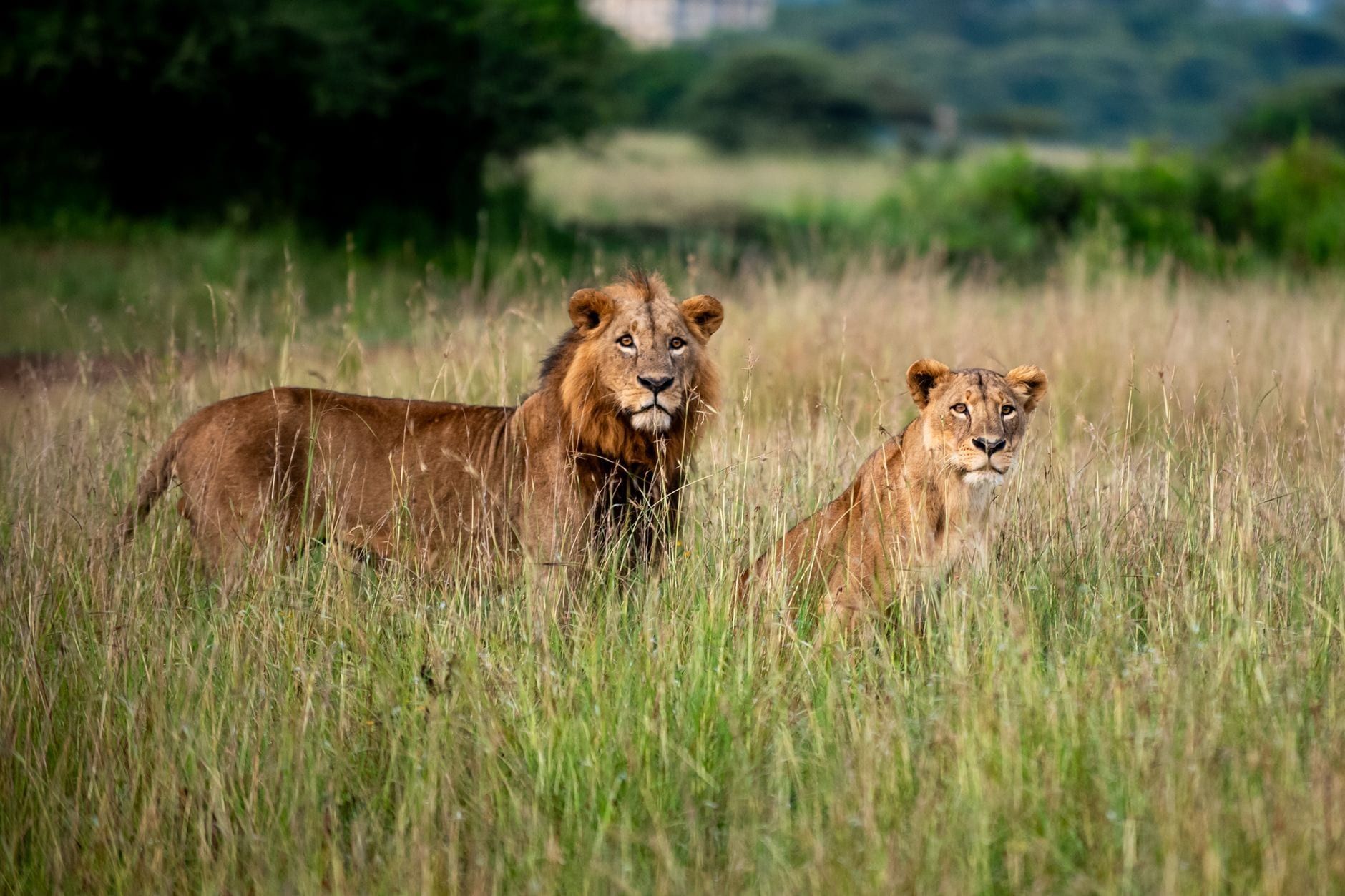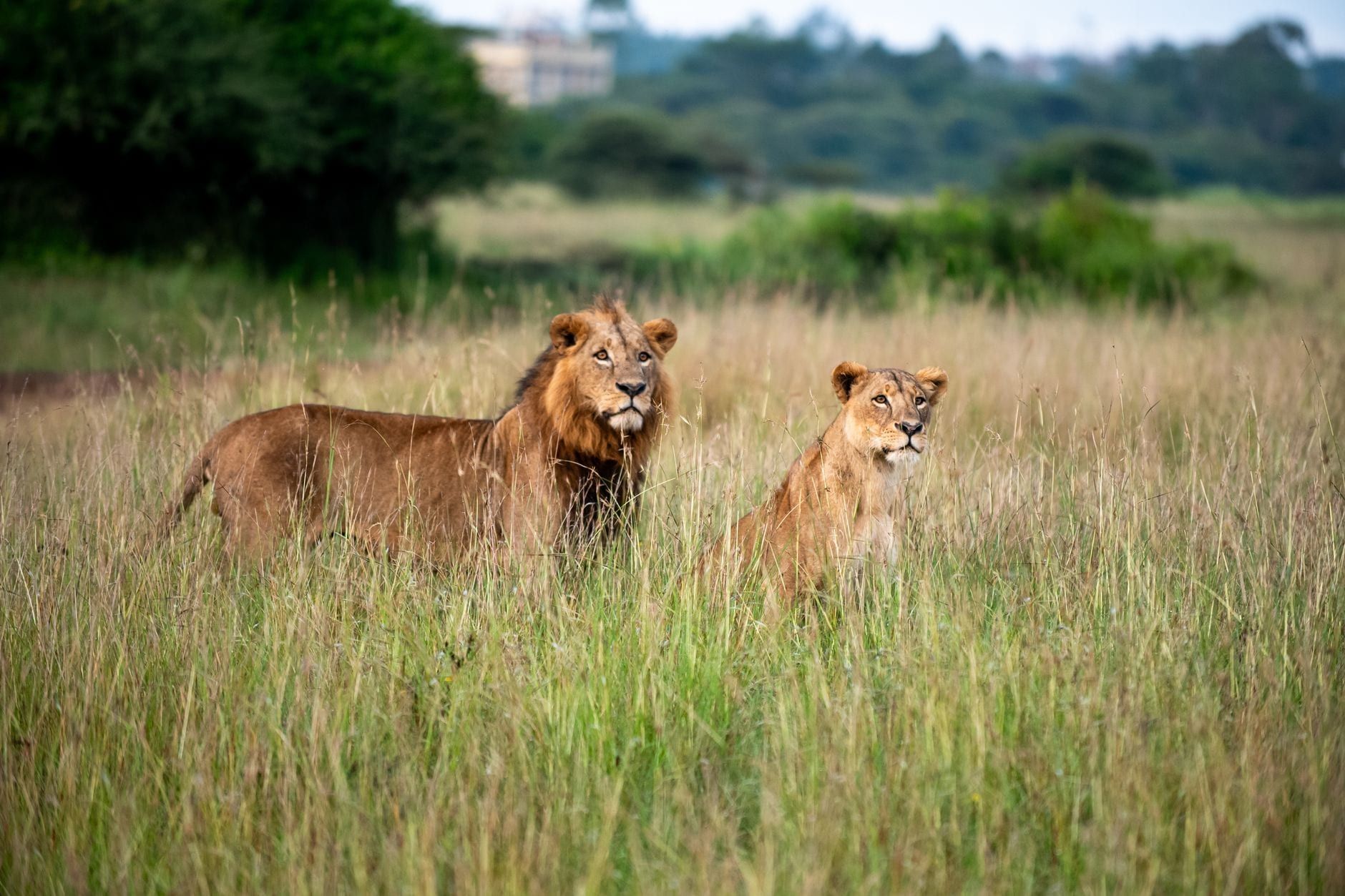
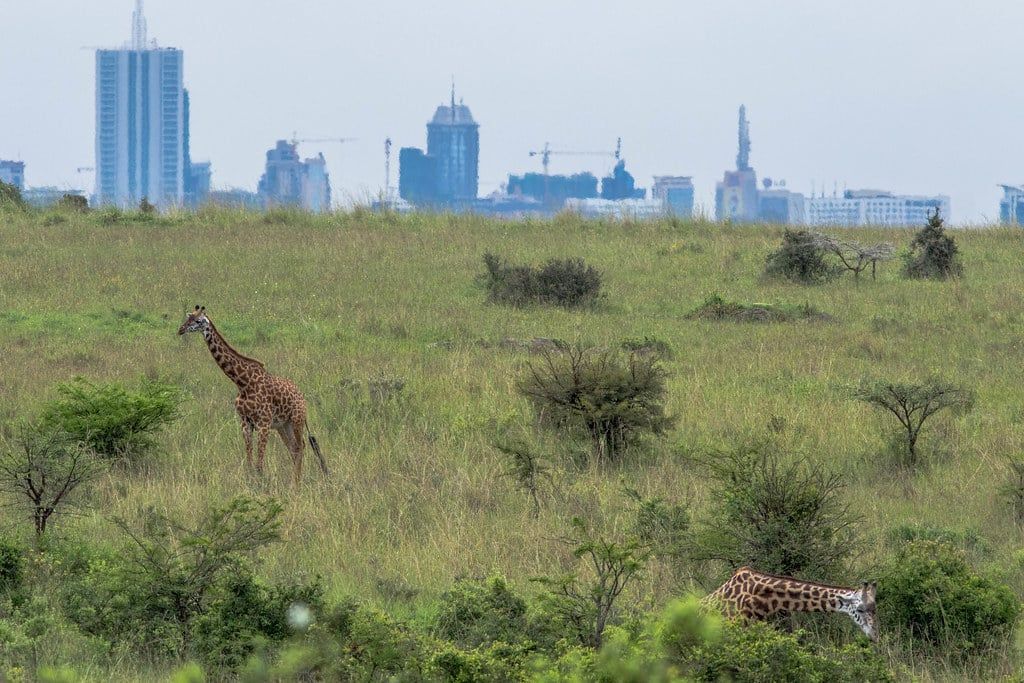
Lions doze in golden grass with glass office towers rising behind them at Nairobi National Park, a 117-square-kilometer reserve just 7 km from the city's central business district. No other national park on earth shares a boundary with a capital city. That's the whole draw: you can drive out of a morning meeting, or off a long-haul flight, and be watching rhino graze before lunch.
This guide covers what you need before you go — which gate to use, what entry actually costs, when the animals are most active, and two copyable itineraries for a half day or a full one.
Why Nairobi National Park Works as a Day Trip
Nairobi National Park covers 117 square kilometers about 7 km south of the CBD — closer than some Nairobi office commutes. Kenya gazetted it in 1946, making it the country's first national park, years before independence. Conservationist Mervyn Cowie pushed for its creation after watching game numbers collapse on the Athi plains in the 1930s, the same plains where Karen Blixen once rode horses among zebra and gazelle.
The park is fenced on its northern, eastern and western edges, where it meets the city, but the southern boundary stays open along the Mbagathi River. That gap connects it to the Kitengela Conservation Area and the wider Athi-Kapiti ecosystem, so wildebeest, zebra and other grazers still drift in and out with the seasons. Less than a tenth of that whole ecosystem actually sits inside the park's fence.
Plan on 3-5 hours for a proper game drive, more if you're adding the elephant orphanage or a riverside picnic. That makes it an easy fit for a business trip, a family with kids too young for a full safari day, or a long layover. Read more on the park's history and highlights before you head out.
Getting There, Gates, Fees & Hours
Six gates ring the park, but day-trippers mostly use one of four: the Main Gate on Langata Road (closest to the CBD and the Nairobi Safari Walk), East Gate, Banda Gate, and Mbagathi Gate near the David Sheldrick elephant orphanage. Langata Road traffic gets heavy at peak hours, so build in a buffer if you're aiming for the 6am opening — arriving late costs you the best light. Check full directions and route options the night before.
An Uber or Bolt from the CBD to the Main Gate takes 20-40 minutes and runs USD 12-20, traffic depending. Matatus from Railways Bus Station or Nyamakima cost around KES 600 but take an hour or more with waiting and transfers — fine if you're only headed to the Safari Walk or Animal Orphanage near the gate, less useful if you want an actual game drive, since walking safaris aren't allowed in the main viewing areas. Most first-timers book a private safari vehicle with hotel pickup instead; it's the simplest way to combine door-to-door convenience with a real drive through the park.
KWS charges by residency tier, and payment is cashless — through the eCitizen KWSPay portal or a card at the gate, not cash in hand. Vehicles pay a separate fee on top of the per-person rate, from KES 300 for a small car up to KES 5,000 for a large bus.
| Visitor category | Adult fee | Child fee |
|---|---|---|
| Non-resident | USD 80 | Reduced child rate |
| Kenya resident | KES 1,350 | KES 675 |
| East Africa citizen | KES 1,000 | KES 500 |
Gates open at 6am and close at 6pm, with last entry around 5:15pm; you can't drive inside after dark unless staying overnight at one of the park's lodges. Check current opening hours and entry fees before you travel, since KWS updates rates from time to time.
Best Time to Visit for a Day Trip
Game drives peak twice a day: roughly 6-9am and again from 3:30-6pm, when it's cooler and predators are still moving. Midday sun pushes lions and leopards into shade, and sightings drop off fast between about 10am and 3pm.
Seasonally, the long dry spell from June/July through October and the short dry patch in January-February give the clearest roads and the densest wildlife around the park's dams and the Mbagathi River. The March-May and November rains scatter herds across the wider Athi-Kapiti plains and can turn tracks to mud, so a 4x4 matters more than it does in dry months.
Weekdays are quieter than weekends, when Nairobi families and school groups fill the Main Gate car park. If photography is the priority, go on a dry-season weekday morning.
Wildlife You Can Realistically Expect to See
Nairobi National Park is nicknamed the Kifaru Ark (kifaru is Swahili for rhino), and for good reason: around 100 black rhino roam its plains and forest edges, one of the highest densities anywhere in Africa. Spotting one grazing with the city's towers behind it is the single most memorable sight the park offers.
Over 40 lions live here in three known prides — Kingfisher, Athi and Mokoyet — enough that the IUCN Cat Specialist Group counts the park as an official Lion Conservation Unit. Leopards are around too, but they're shy and mostly nocturnal; don't count on seeing one. Serval cats, a smaller, less-photographed cousin of the leopard, turn up more reliably in the long grass than either.
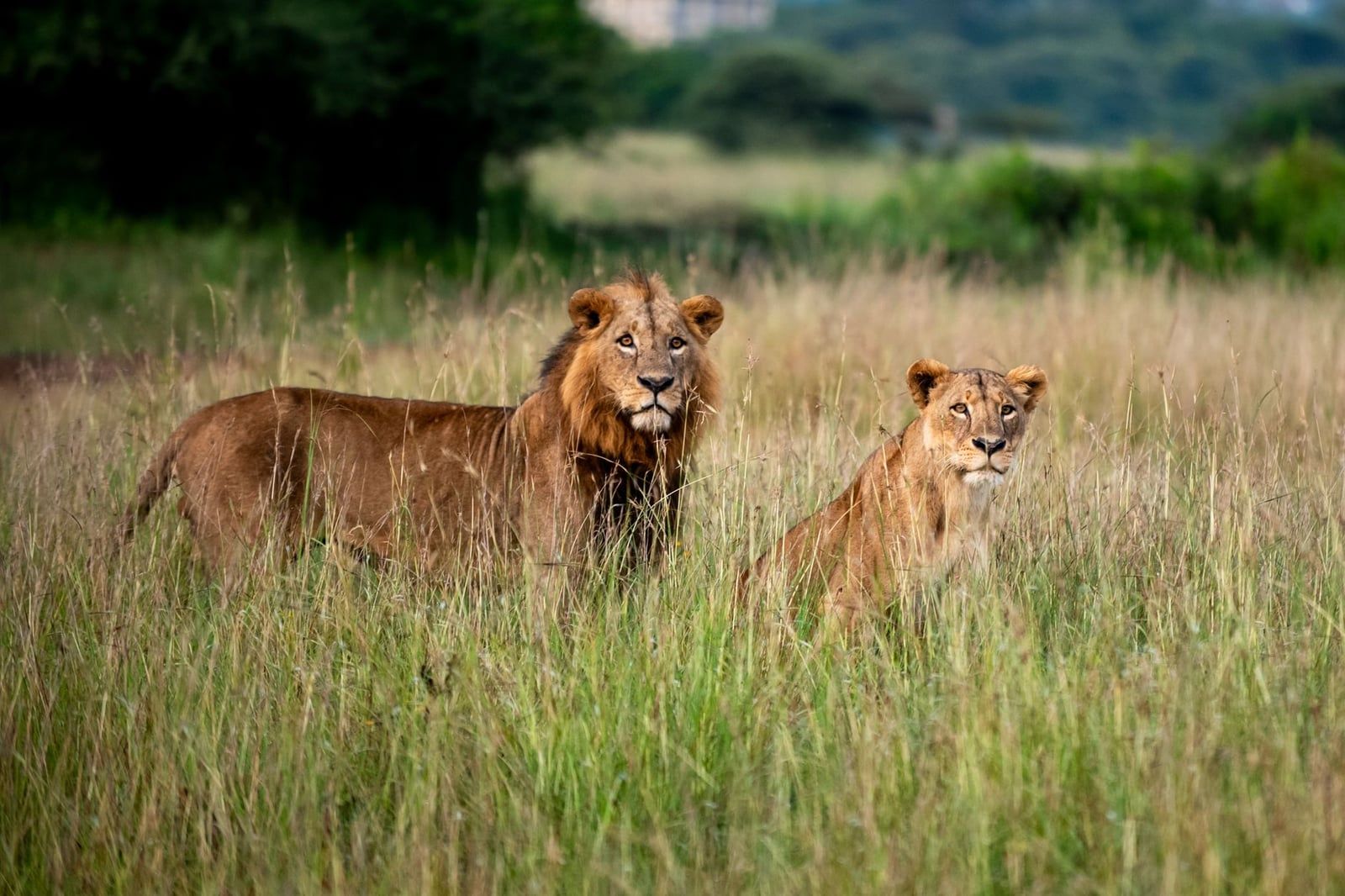
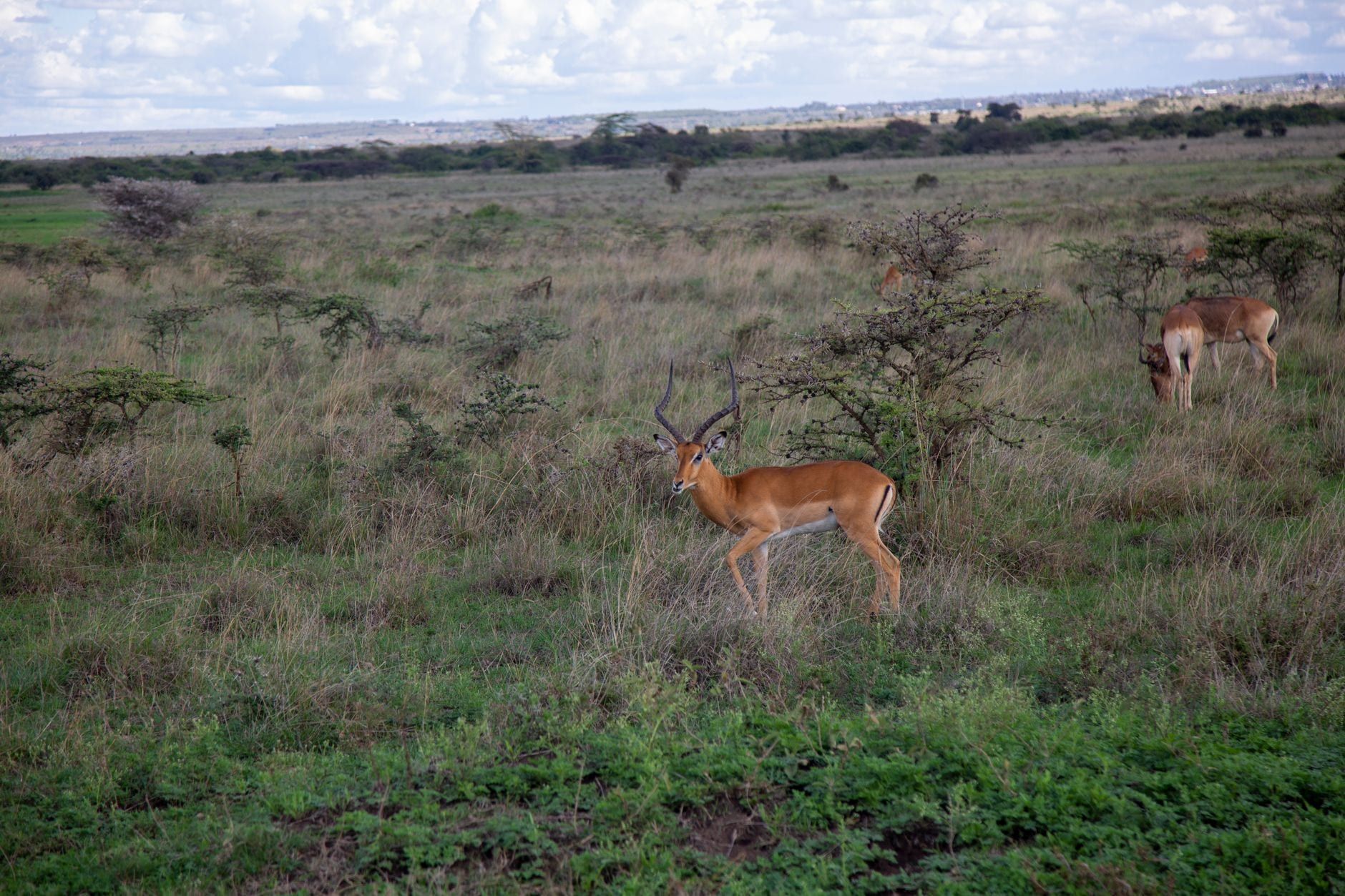
Giraffe, zebra, buffalo and a long list of antelope species graze the open plains, and birders can log over 400 species (some counts run past 520) in a single morning, from secretary birds stalking the grass to grey-crowned cranes at the dams.
The park has no elephants — it's simply too small to support a herd long-term. That leaves four of the Big Five within reach: lion, leopard, buffalo, and both black and white rhino. For the elephants, head to the David Sheldrick Wildlife Trust next door; a combined park and orphanage tour is the easiest way to fit both in one trip.
Sample Day Trip Itineraries (Half-Day and Full-Day)
Two versions cover almost everyone: a park-only loop for a half day, and a longer plan that pairs the game drive with the elephant orphanage and a nearby stop or two.
Half-Day Itinerary: Park Only (4-5 Hours)
Enter at the Main Gate by 6am, right as it opens, and head for the plains around Impala Observation Point while the light's still soft and predators are active. Spend the first two hours on a slow loop through open grassland and acacia bush, then swing toward Hippo Pools by around 8:30am — one of the only spots where you can leave the vehicle and walk with an armed ranger along the river, looking for hippo and monitor lizards below the cliffs. From there, most drivers loop past the Ivory Burning Site Monument, where Kenya publicly destroyed its ivory stockpile as an anti-poaching statement, before exiting by 10:30-11am. A half-day tour covers this exact route with a driver-guide who knows where the prides have been seen that week.
Full-Day Itinerary: Park Plus Nearby Stops (6+ Hours)
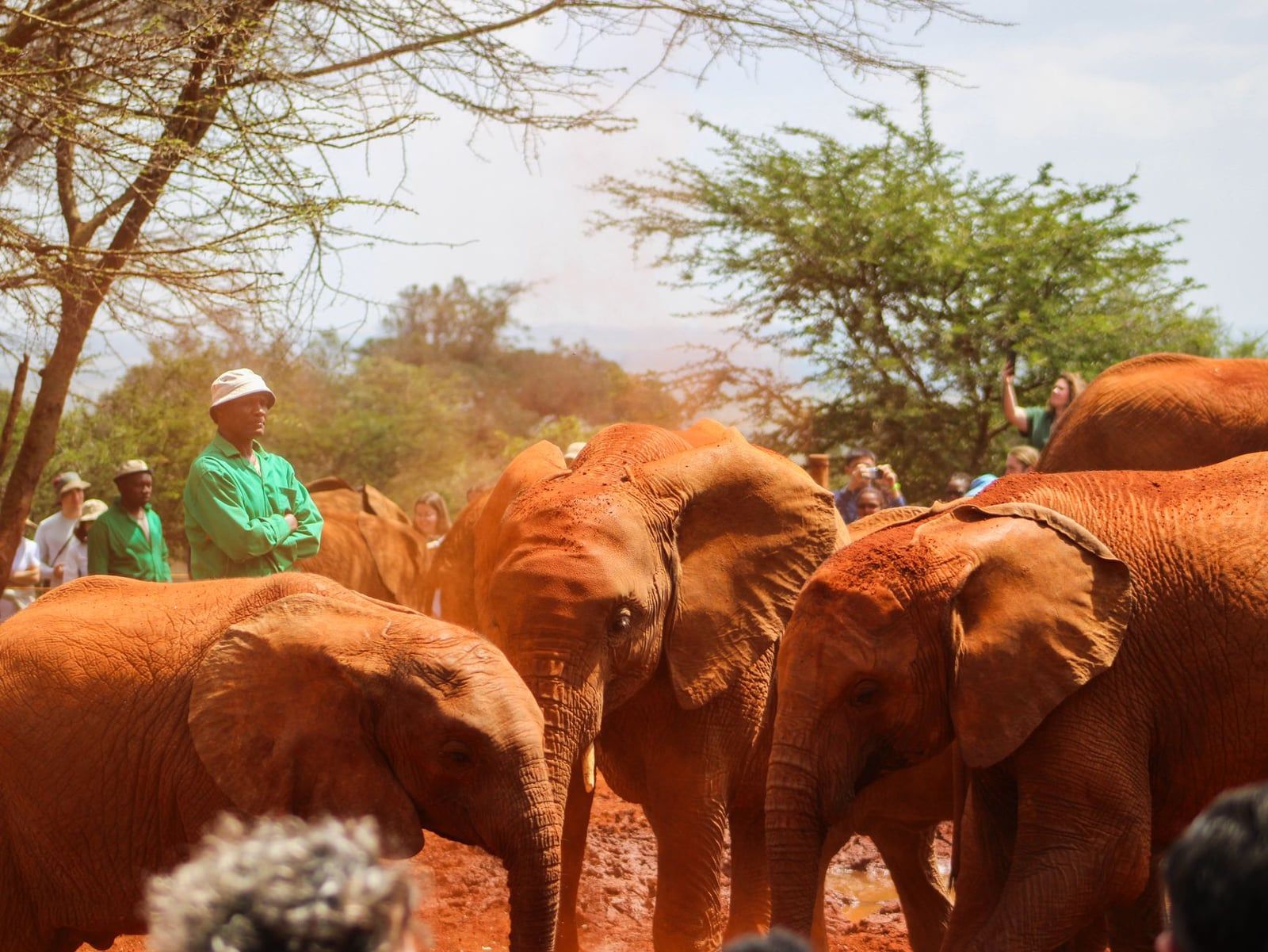
Follow the same game-drive route, but exit by 10:30am and head for the David Sheldrick Wildlife Trust near Mbagathi Gate, open to the public for exactly one hour, 11am to noon, to watch keepers bottle-feed orphaned elephant calves. From there it's a 20-30 minute drive to the Giraffe Centre in Langata to hand-feed Rothschild giraffes from a raised platform, or to the Nairobi Safari Walk back at the Main Gate for an easy boardwalk past white rhino and bongo antelope if the morning's driving was enough walking for one day. Round off the afternoon at Bomas of Kenya, 15-20 minutes away, for a cultural show, or just find lunch in Langata before heading back into the city. Pack a picnic or snacks for the park itself — there's no restaurant inside, and designated spots like Hippo Pools and the Ivory Burning Site are the only places you're allowed out of the vehicle to eat.
Self-Drive vs Guided Tour vs Airport Layover Safari
How you get around the park matters as much as when you go. Here's how the three main options stack up for a single-day visit.
Self-Drive
A sedan can manage the main graded roads in dry season, so a 4x4 isn't strictly necessary between June and October or in January-February. After rain, though, the murram tracks turn slick and a 4x4 stops being optional. Either way, the 40 km/h speed limit and the rule to stay inside the vehicle with doors closed apply to everyone. Self-drive saves money but leaves all the spotting work to you, with no guide radioing in where the lions were seen an hour ago.
Guided Tour with Pickup
A private guided vehicle with hotel pickup runs roughly USD 60-150 per person including park fees, and it's the version most families and first-timers book. Driver-guides work the park daily, know current pride locations, and handle the KWSPay entry logistics so you're not fumbling with an app at the gate. For solo travelers or anyone unsure about navigating Nairobi traffic, this is the easier call — browse safari tour options or the full range of park tours to compare.
Airport Layover Safari
JKIA sits less than 5 km from the park fence, and the drive from either JKIA or Wilson Airport takes 15-30 minutes. That makes Nairobi National Park the standard answer for a layover of 6 hours or more: bag drop, safari vehicle, a 3-4 hour loop through the plains, and back to check-in with time to spare. Business travelers with one free morning and families breaking up a long connection both do well here — just clear your immigration requirements first.
Practical Tips & Park Rules
- Binoculars and a zoom lens for distant sightings
- Cash isn't accepted at most gates — pay via eCitizen KWSPay or card
- Snacks and a reusable water bottle (single-use plastics are banned)
- Sunscreen, a hat, and layers for cool mornings in an open vehicle
- Neutral, earth-toned clothing rather than bright colors
Stay inside the vehicle with the doors closed except at marked picnic and walking areas like Hippo Pools — this is open habitat, not an enclosure, and KWS enforces a 20-meter minimum distance from wildlife. Personal photography from the vehicle is fine, but drones are banned without written sign-off from KWS, Kenya's Ministry of Defence, and the civil aviation authority; operators have had equipment confiscated for flying without it.
Cell signal holds up across most of the park, since it's minutes from the city, so this isn't a place you'll go dark. The bigger risk sits at the unfenced southern edge, where predators occasionally cross into neighboring land. Stick to the marked routes and your guide's advice, and it stays a manageable day out.
Frequently asked questions
Can Nairobi National Park be visited in a single day?
Yes. Most visitors need only 3-5 hours for a worthwhile game drive, and the park's location 7 km from the CBD makes it one of the most accessible parks in Kenya for a half-day or full-day trip.
How much does it cost to enter Nairobi National Park?
KWS charges by residency tier: non-resident adults pay USD 80, Kenya residents pay KES 1,350 (children KES 675), and East Africa citizens pay KES 1,000 (children KES 500). Payment is cashless, via eCitizen KWSPay or card at the gate, plus a separate vehicle fee.
Are there elephants in Nairobi National Park?
No. The park is too small to sustainably support elephants. The adjacent David Sheldrick Wildlife Trust hand-raises orphaned elephant calves before releasing them into larger parks like Tsavo, and opens to visitors daily from 11am to noon.
What is the best time of day to see animals?
Early morning, roughly 6-9am, and late afternoon, roughly 3:30-6pm, offer the most wildlife activity. Midday heat pushes animals into shade and sightings drop off.
Can I do Nairobi National Park during a layover at the airport?
Yes. The park is 15-30 minutes from Jomo Kenyatta International Airport, and it's a common stop for travelers with connections of 6 hours or more.
Do I need a 4x4 vehicle to self-drive through the park?
Not strictly, in dry season — the main roads are graded murram tracks a sedan can handle. After rain, a 4x4 is worth booking, since the same tracks get slippery.
What else can I combine with a day trip to the park?
Popular add-ons include the David Sheldrick Elephant Orphanage (public hour 11am-noon), the Giraffe Centre in Langata, the Nairobi Safari Walk and Animal Orphanage at the Main Gate, and the Bomas of Kenya cultural show.
Will I see the Big Five at Nairobi National Park?
Only four of the five are possible — lion, leopard, buffalo, and both black and white rhino — since the park has no elephants. Leopards are elusive, so treat a sighting as a bonus rather than an expectation.